
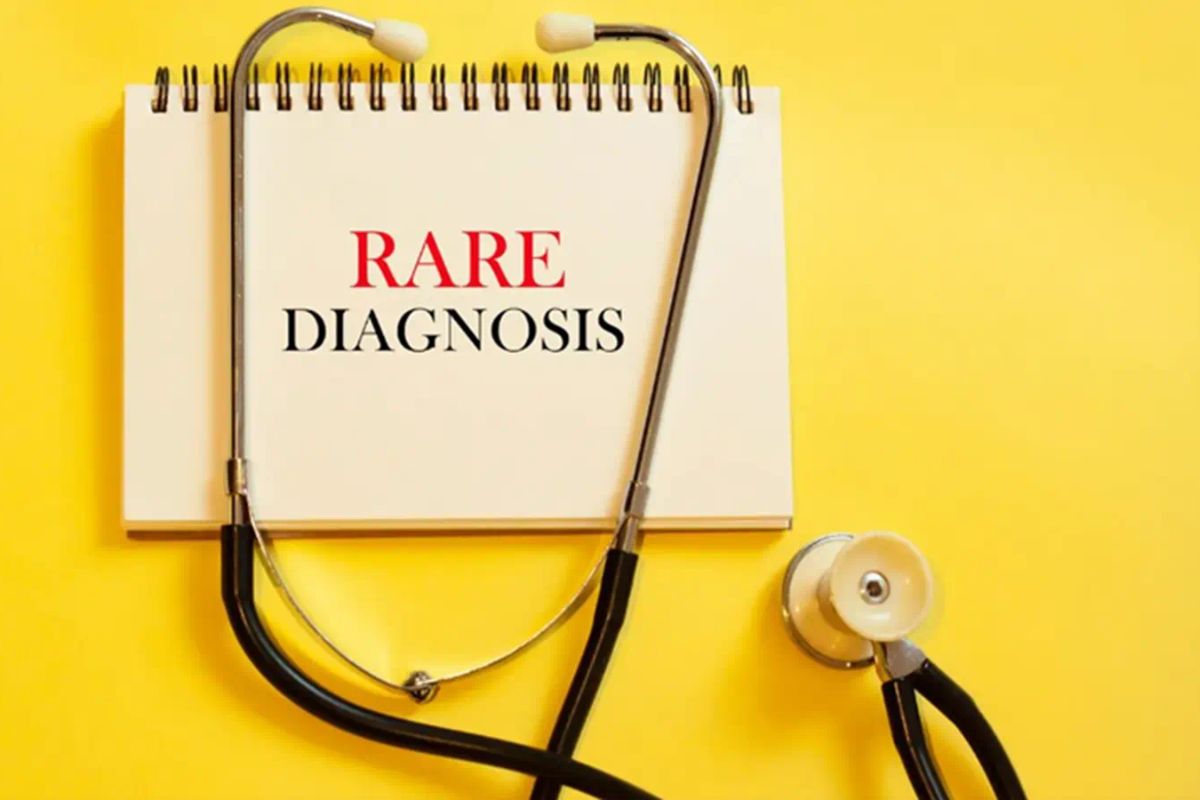
Rare disease diagnosis with AI is significantly accelerating and standardizing the diagnosis process. Do you know that 350 million people globally suffer from rare diseases?
As such conditions are rare and complex, many are not diagnosed, and the rest are misdiagnosed. You may know how AI is reshaping the medical field with its accurate diagnosis. Further, AI provides personalized treatment plans and helps doctors with drug discovery.
Another good news is that the AI can detect the disease even faster than ever. Artificial intelligence has gained popularity in diagnosing complex health issues by analyzing a vast dataset, integrating clinical information, and recognizing patterns.
Curious to know more? Stay with me and continue reading this guide. This article will break down every aspect of how AI contributes in this context.
Introduction to Rare Diseases and AI
Rare diseases are a group of heterogeneous diseases affecting a small number of people without any single global definition.
The symptoms of the disease are not very common and vary not only from disease to disease but also from patient to patient.
Due to the rare occurrence of the disease, medical expertise is also very rare. Sometimes, people wait for even a year to get an accurate diagnosis of their disease. Some rare diseases include CANDLE syndrome, Gaucher disease, Cystic Fibrosis, and more.
Over the past few years, the utilization of artificial intelligence and machine learning in the healthcare sector has grown massively. Artificial intelligence has significantly revolutionized the analysis of medical images, diagnostic accuracy, drug development, and personalized treatment plans.
A common theme among patients with rare diseases is that they struggle to receive the correct diagnosis. An early diagnosis is crucial because it enables immediate intervention to reduce the progression.
According to studies, AI could relieve the diagnostic odyssey (the long process of diagnosis). Like most rare diseases, patients and their families often face a notable challenge: the delay or error in obtaining an accurate diagnosis.
So, the medical practitioners also drastically restrict themselves to prescribing prompt medical procedures. Though there are initiatives in the UK, such as EAMS (Early Access to Medicine Scheme), the UK Rare Disease Framework is unable to access those potential medicinal funds that persist.
Challenge of Rare Disease Diagnosis and AI Impact
Limitations in Traditional Diagnostic Methods
Symptoms of rare diseases coincide with common illnesses, which makes it complex to diagnose the rare disease due to its infrequency.
Traditional diagnosis relies mostly on pattern recognition and the standard diagnostic tests, and tools can not be smart enough to detect the genetic mutation associated with the conditions. Thus, the traditional methods further complicate the disease recognition process.
Impact of Delayed Diagnosis
Sometimes, a rare disease patient has to wait to get an accurate diagnosis for even a year. Without timely intervention, several rare diseases progress with time, resulting in irreversible complications to the patient.
These delayed diagnoses can render treatments less effective and lead to major health concerns that place to financial burden on the patient.
Fragmented Healthcare Systems
Since rare diseases are very uncommon, access to knowledgeable specialists is very tough. Especially in rural areas, patients need to move from one medical practitioner to another to get the right disease detection. The data and complications of the patients may not be shared among professionals.
This fragmented healthcare system leads to delayed diagnosis as patients suffer from repetitive consultations and tests.
How We Use Artificial Intelligence in Healthcare
Early detection of rare diseases can make the key difference between life and death. The healthcare system gets vast datasets about patients, conditions, and treatments. They have both structured datasets, such as patient demographics, lab results, and more.
In contrast, their unstructured dataset includes clinical notes and reports written by the medical practitioner for each patient. This data is protected under the Health Insurance Portability and Accountability Act of 1996 (HIPAA) and related rules.
Key Applications of AI in Healthcare
- Diagnosis and Imaging: AI systems can analyze medical images such as X-rays, MRIs, CT-Scans with accurate results. Through the detection of these images, AI can detect the signs of various diseases, including cancer, diabetic retinopathy, lung issues, heart disease, and more.
- Clinical Decision Support: Multiple types of AI in healthcare that direct the callers (patients) to the right departments. AI tools work based on vast data for more accurate diagnosis and provide real-time and evidence-based insights. AI reduces documentation time, so it reduces the burden on clinicians. Clinicians can focus more on patient care.
- EHR and Data Management: AI has become a core component of Electronic Health Records (EHR). The Healthcare sector is overwhelmed with a massive amount of data. AI collates data from disparate sources such as lab results and genomic tests, and helps doctors make decisions from that information. AI models enable doctors to see concise summaries of patients’ charts, saving time during appointments.
How AI Transforms Rare Disease Diagnoses
Artificial intelligence can analyze and process vast datasets, from clinical narratives to symptoms to imaging and genetic tests, and reports. Moreover, AI tracks the connections among even unrelated bits of information.
While the traditional disease recognition methods spend an amount of time thinking about it, AI models reduce the time spent on verifying rare disease diagnosis.
Natural Language Processing (NLP) models can recognize patterns in thousands of patients’ histories, the physicians would take a year if they do it manually. AI software can detect early symptoms of Huntington’s disease from brain scan and eye movement data.
Machine learning models are also trained to identify systemic sclerosis complications, including lung disease, lung function tests, and more.
These advancements reflect how rare disease diagnosis with AI is not only keeping pace with human diagnosis potential, but it unveiling the invisible. Glance at how AI transforms the rare disease diagnosis landscape:
1. Enhanced Medical Imaging Interpretation
AI models can scan thousands of medical images with accuracy. Sometimes, human eyes make mistakes in identifying subtle abnormalities, but AI can recognize them if it is trained on a variety of image datasets.
In orphan diseases, in which MRI scans can appear normal, but AI can predict the diseases earlier and with more accuracy. AI integration for radiology identifies subtle anomalies covering rare neurological and skeletal issues.
Image segmentation algorithms can also track organ size changes, providing accurate parameters to follow to manage the issue. The AI models provide insight into accurate organ size and volume over time, minimizing damage to healthy organs.
2. AI in Drug Discovery
Diagnosis is the first step of any medical treatment and solving the health issue. Treating rare diseases comes with extra challenges because of their rarity. Most rare diseases have no treatment or treatment with prohibitively costly.
Traditionally, drug discovery was centralized on diseases affecting a large number of patients. But what if AI rewrites the script?
AI-based platforms assist healthcare practitioners in the discovery of novel drugs for rare diseases. AI models employ methods such as predictive analysis and molecular modeling to accelerate the drug discovery procedure.
AI-driven platforms are also used to explore alternative treatments for such rare conditions as Huntington’s Disease, hemophilia, and more. AI is also being integrated into Homeopathy and Ayurveda so that alternative treatments for rare diseases could be found.
3. Real-time Monitoring of the Patients
AI also monitors how patients are responding to the provided treatments for rare diseases. Wearables and linked apps get input from lab reports, symptom records, and biomarker fluctuation into AI systems that suggest a dose change, and alert for possible complications.
Some healthcare systems have introduced AI chatbots for rare disease patients, and they monitor medication regimes, schedule teleconsultations, and raise side effect warnings.
AI-enabled RPM (Remote Patient Monitoring) facilitates early intervention by recognizing subtle changes in a patient’s health condition. This early detection can prevent the progression of health issues and reduce the chances of further complications.
AI models significantly reduce the need for hospitalization for rare disease patients. Patients can receive necessary care at their home, eliminating the financial burden for the patients.
4. Solving the Data Dilemma
The most significant challenge os implementing AI in rare disease diagnosis is the lack of relevant data. Typically, machine learning algorithms require massive datasets, which are difficult to obtain they only affect one in a thousand people worldwide.
So, some approachable AI models are used in such cases to detect the rare disease. Intervention for rare diseases can use transfer learning models. These AI models are trained on common diseases as a basis for alteration using small datasets to regulate prediction.
Data can be modified from the existing record, allowing algorithms to train effectively. Models learn from sites while data remain local to the individual.
It is effective for privacy, along with collaborating with larger individuals. In such cases, institutions can contribute to individuals’ insights without exposing patients’ sensitive data.
What is Still Pulling AI Back in Rare Disease Diagnosis?
Though AI shows great promise, but faces several challenges in rare disease diagnosis.\
- Black box algorithm: As of now, many AI models are black box systems, lacking transparency into their path to a conclusion. The AI algorithms should be explainable; otherwise, several clinicians will not implement them in life-altering decisions.
- Negation failure: Some research shows that many AIs are struggling to understand medical negations. For example, AI can’t differentiate between “Signs of malaria” and “No signs of malaria”.
- Privacy and liability: Data privacy, informed consent of implementing AI, can all be complex issues in both ethical and legal scenarios.
- The need for human interference: As per experts, we must understand that AI should perform as a competent assistant instead of replacing an experienced medical practitioner. Chemical validation must be performed with human insights, especially in the final step of the diagnosis process.
The Future of Rare Disease Diagnosis With AI
The involvement of AI in rare disease diagnosis is rapidly expanding. We can expect the future:
- AI models will assist the people residing in remote areas based on both symptoms and health history.
- Clinical-based AI algorithms provide doctors with real-time suggestions through their acquired knowledge base of rare diseases.
- AI automates and enhances the analysis of NGS (Next Generation Sequencing Data), identifying the genetic anomalies responsible for 80% of rare diseases.
- Even with limited data, machine learning and deep learning can interpret medical images such as MRIs, microscopy with high accuracy. AI models work to pinpoint subtle disease diagnoses.
Conclusion
While several rare diseases are genetic and can not be prevented from developing, AI works well to provide some secondary preventive measures.
Advances in machine learning and artificial intelligence are a big step in the medical science revolution. AI-powered tools can detect rare disease symptoms quickly and more accurately.
So, the patients get a faster and more tailored treatment plan, contributing to patient recovery and safety.
Teaming up with genomics and wearable devices, AI can provide personalized medical plans. AI uses big data and smart algorithms to design a tailored medical plan fit for each patient’s needs.
As AI and other tech components are advancing, rare disease diagnosis with AI will get better, making life better for many.