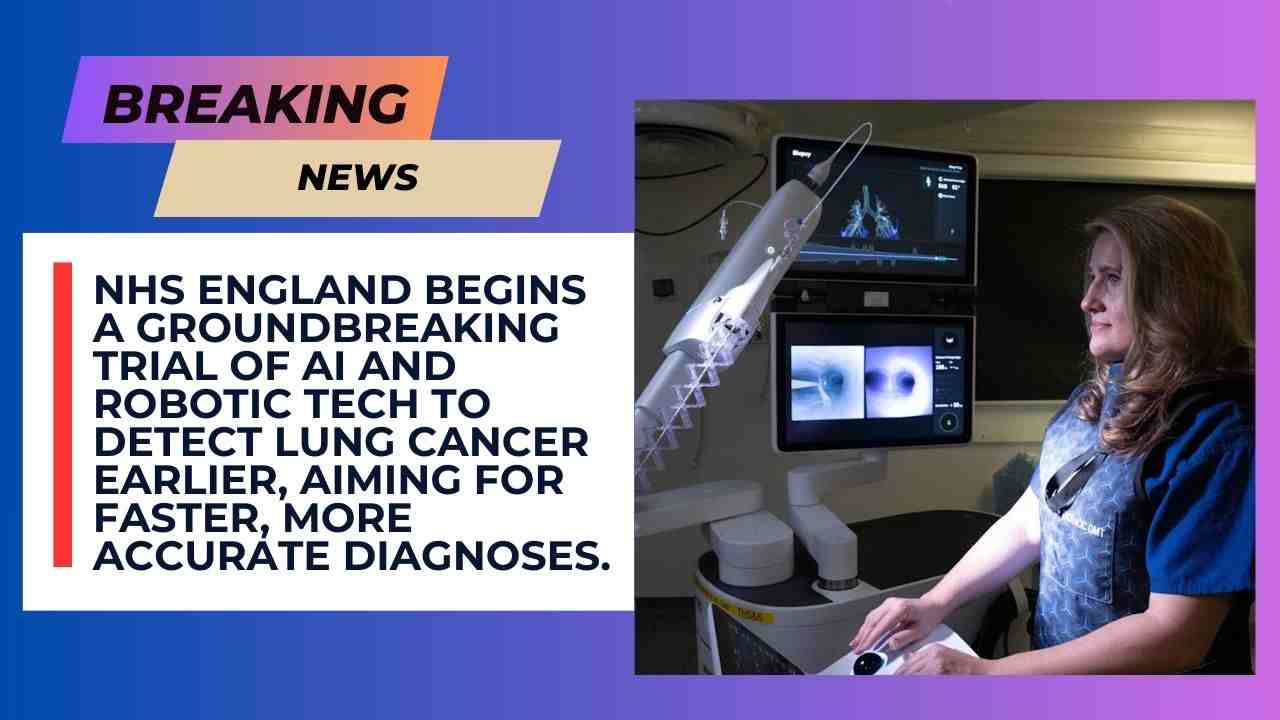

NHS England will conduct a pilot of N artificial intelligence (AI) and robot-assisted care and accelerate the detection and diagnosis of lung cancer, the deadliest type of cancer in the UK. The trial coincides with the health service promising to provide an opportunity to all smokers and former smokers to screen themselves against lung cancer by 2030.
Such growth will result in the estimated 50,000 lung cancers being diagnosed by 2035, with 23,000 of those at an early stage, which would save thousands of lives, it said.
The government is especially targeting the disease in its future national cancer killer in Britain, which has had a long tradition of high levels of smoking. It takes approximately 33,100 lives annually in the UK, approximately 91 lives per day.
It is also one of the core areas of improvement since it is a vivid illustration of health disparities that reflect the wealth of people. The impact of it on poorer people is so disproportionate that it will take 12 months of the nine-year difference in life expectancy between the most and least deprived English regions.
“If shown to be effective, the technology could help transform lung cancer diagnosis as the NHS screening programme increasingly identifies more people with very small nodules that would previously have gone undetected until much later,” NHS England said.
“For many patients, weeks of repeat scans and procedures could be replaced with a single half-hour cancer biopsy, reducing prolonged uncertainty and avoiding more invasive surgery.”
The group responsible for conducting the trial already conducted approximately 300 robotic biopsies, a process that resulted in the treatment of 215 individuals with cancer.
“Lung cancer is the leading cause of cancer death in the UK, but diagnosing it at an earlier stage can significantly improve people’s chances of survival”, said the chief executive of Cancer Research UK, Michelle Mitchell.
“New technologies like this have huge potential, and tests to ensure they’re accurate and beneficial for patients in the real world should happen quickly so that innovations can reach everyone sooner. “
Subscribe to Updates
Get the latest creative news from FooBar about art, design and business.
NHS England to test AI and robotic technologies to detect and diagnose lung cancer
 By Editor Adeel2 Mins Read