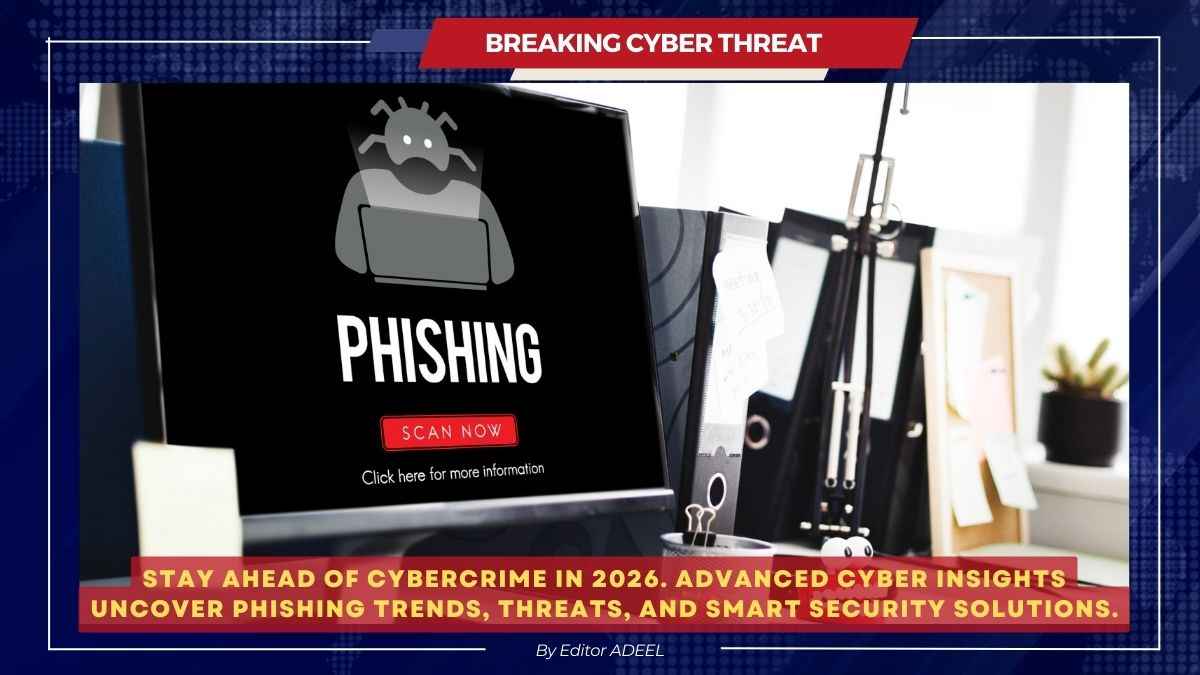


Phishing is one of the most common cyber threats today. It happens when attackers pretend to be a trusted person or company to trick people into giving away passwords, bank details, or other sensitive information. These fake messages usually come as emails, text messages, or social media messages that look real but lead to harmful websites or downloads.
Phishing works by using engineering. Attackers copy the design of real banks, shops, or services so the victim feels safe clicking a link or opening an attachment. Once the victim enters login details or downloads a file, the attacker can steal data, lock systems with ransomware, or commit fraud. Experts say phishing is involved in more than 90% of successful cyberattacks, which shows how dangerous it is for both individuals and businesses.
In 2026, phishing remains a top concern for cybersecurity leaders around the world. Reports show that nearly one million phishing attacks are recorded every quarter, and the number is rising again after a brief drop. Older adults are especially at risk, with people over 60 reporting more than three times as many phishing incidents as younger groups. Many attacks now use artificial intelligence to create more realistic messages and fake websites, making them harder to spot.
The World Economic Forum’s Global Cybersecurity Outlook 2026 highlights how AI is changing the cyber threat landscape. The report says 94% of business leaders believe AI will be the biggest driver of change in cybersecurity in the coming year. On one side, AI helps defenders detect phishing faster and block fake messages. On the other side, criminals use AI to generate convincing scams, target victims more precisely, and scale their attacks. The report warns that as technology spreads unevenly, countries and companies with weaker defenses will face high risks.
At the same time, experts stress that basic security habits can reduce phishing damage. These include checking email addresses carefully, not clicking unexpected links, using multi-factor authentication, and reporting suspicious messages. Many organizations are also training employees to recognize phishing and using automated tools to filter fake emails before they reach inboxes. Governments and tech firms are working together to share threat data and improve rules for online safety.
Phishing is still a major cyber threat in 2026, but it can be managed with awareness and the right tools. As AI makes attacks smarter, people and organizations must stay alert, update their security, and follow expert guidance from reports like Global Cybersecurity Outlook 2026. By doing so, they can lower the risk of falling for phishing scams and protect their data in an increasingly digital world.
Subscribe to Updates
Get the latest creative news from FooBar about art, design and business.