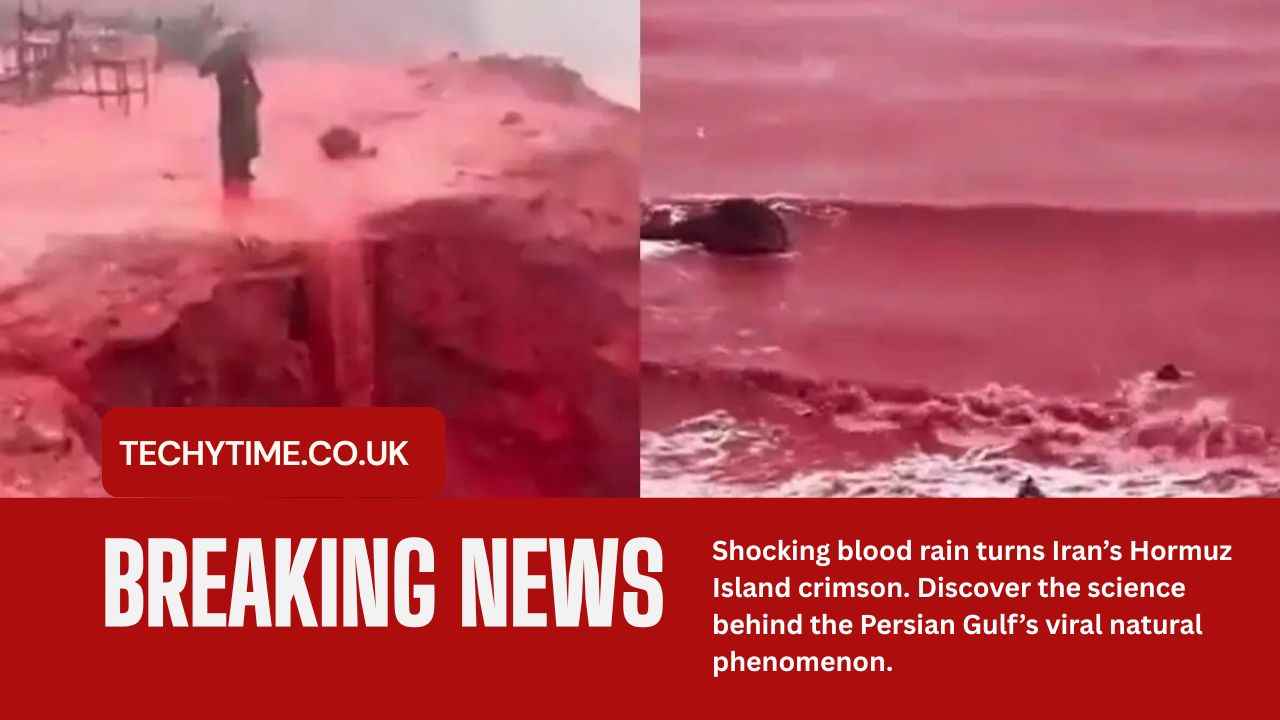


Iran’s Hormuz Island in the Persian Gulf has turned blood red. Heavy rain washed water onto beaches. The sight looks like a scene from a horror movie. Social media exploded with videos. People call it “blood rain.” But science explains this eerie event.
The island sits near the Strait of Hormuz. This key spot links the Persian Gulf to the Gulf of Oman. Hormuz is small but famous. It has a rainbow-like solid from minerals. Colours range from yellow to red. Tourists flock there for its wild landscapes.
Recent downpours hit on December 16, 2025. Rain-soaked iron-rich hills. Red soil rushed to the coast. Beaches and shallow seas glowed crimson. Videos show streams of red water flowing from cliffs. One clip from Joe Truzman went viral. Another from Weather Monitor showed turquoise waves turning rusty.
Scientists point to hematite. This is iron oxide, or rust’s main form. It colours Mars red, too. Rain dissolves hematite from rocks and soil. Particles flow downhill via erosion. They stain sand and water deep red. The effect lasts until the tides wash it away.
Hormuz was formed from ancient salt domes and volcanoes. Layers hold ochre, gypsum, and iron ore. Locals mine red pigments for art. The island draws geologists and photographers. This event boosts its fame as the “Rainbow Island.”
Global media covered it fast. India Today called it an “otherworldly transformation.” News channels share videos of glowing coasts. For the News highlighted viral footage. Coverage spread awe and questions.
Is it harmful? Experts say no. The red tint is natural and temporary. It poses no risk to humans or sea life. But constant rain could erode land over time. This changes the island’s shape slowly.
Post events happened too. In March 2025, blood rain hit the cliffs. November videos showed red beaches. Rain triggers it yearly in wet seasons. Locals know the drill. They watch runoff paint the shores.
The spectacle grabbed attention amid tensions. The Strait of Hormuz carries 20% of the world’s oil. Red views sparked wild theories online. Some feared pollution or omens. Facts calm those fears. It’s pure geology at work.
Tourists plan visits now. One Instagram user captured stunning shots. Mohsen Fitsaz posted red runoff scenes. Photographers chase the vivid hues. Scientists study mineral flows.
Hormuz reminds us of nature’s power. Simple rain creates drama. Iron meets water. Red spreads. The Persian Gulf looks alive in crimson. This event will linger in memories.
Subscribe to Updates
Get the latest creative news from FooBar about art, design and business.