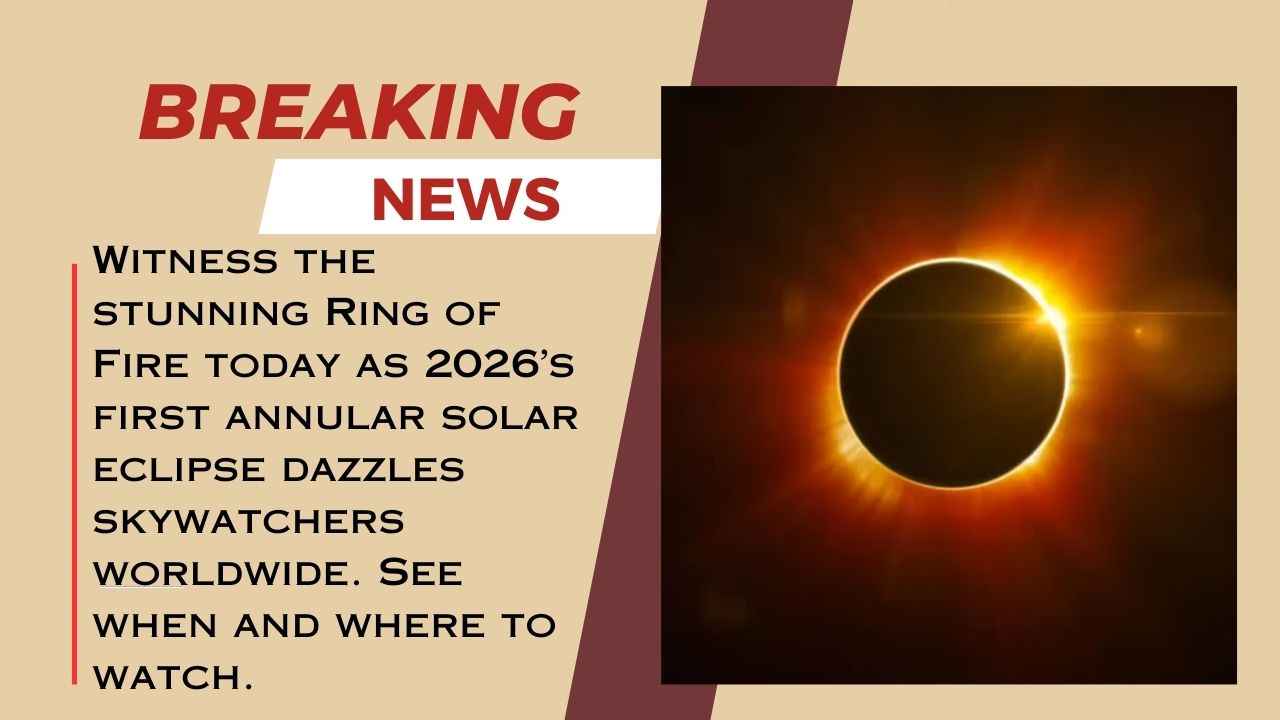

Today marks the first solar eclipse of 2026. An annular solar eclipse graces the skies on Tuesday, February 17. It creates a stunning “ring of fire” effect around the sun. This celestial event captivates skywatchers worldwide. The moon passes between Earth and the sun. But it appears too small to fully block the sun’s disk.
The eclipse begins at 11:42 a.m. GMT per Time and Date. It peaks in the day for viewers in remote areas. The event lasts several hours in total. Only Antarctica offers a full view of the annular phase. Here, the moon leaves a bright ring visible. Partial views reach the Southern Hemisphere.
Places like southern South America see a partial eclipse. The sun looks like it has a bite taken out. Africa and Australia miss it entirely. An annular eclipse differs from a total one. The moon is farther from Earth during this time. It cannot cover the sun completely, says NASA. This forms the signature “ring of fire.” Sunlight streams around the moon’s edges. It’s a dramatic sight for those in the path.
Partial eclipses show just a chunk of the sun obscured. Viewers in southern regions get this teaser effect. No full blackout occurs anywhere. Safety comes first during any solar eclipse. Never look directly at the sun. It can cause permanent eye damage, warns NASA. Use special solar viewing glasses for protection. Or build a simple projector with a cardboard box. These methods let you watch safely.
Pinhole projectors work well, too. Poke a hole in foil over a box. Project the sun’s image onto white paper inside. The eclipse path skips most populated areas. Antarctica’s harsh conditions limit observers. But partial glimpses excite southern sky enthusiasts.
This eclipse highlights Earth’s place in the cosmos. It reminds us of precise orbital dances. Scientists study it for solar data. Southern Hemisphere chasers prepare eagerly. The weather could play spoiler in partial zones. Clear skies boost chances.
Eclipses like this happen yearly somewhere. 2026 brings more later, including lunar ones. Mark calendars for future shows. NASA tracks all eclipses closely. Their site offers maps and timers.
Freelance reporter Lois Mackenzie covered this event. She notes its remoteness limits viewers. Still, the “ring of fire” dazzles. Global interest surges despite inaccessibility. Social media buzzes with maps and tips. Astronomy apps track it live.
This eclipse underscores safe viewing rules. Experts repeat: glasses or projectors only. Eyesight risks are real. As the day unfolds, Antarctica steals the show. Partial watchers elsewhere cheer their bites of sun. 2026’s celestial opener shines on.
The event wraps up soon for early spots. It inspires awe in astronomy fans. Stay tuned for photos from the ice.
Subscribe to Updates
Get the latest creative news from FooBar about art, design and business.
Ring of Fire Lights Up Skies: 2026’s First Annular Solar Eclipse Today
 By Editor Adeel3 Mins Read