

South Korea’s KOSPI index, the world’s top-performing stock market in 2026, plunged 7.2% on Tuesday. This marked its biggest single day since 2024. The sudden tumble ended a stellar rally driven by tech giants.
The market reopened on Monday after a public holiday. It faced heavy selling right away. Circuit breakers halted trading briefly as shares fell by more than 8% intraday.
Investors dumped shares in Samsung Electronics, SK Hynix, and Hyundai Motor. These heavyweights had powered the KOSPI up by 5-50% this year before the peak. Panic spread across trading desks in Seoul.
The trigger was escalating conflict in the Middle East, including US-Iran tensions. Oil prices surged as fears grew over supply disruptions. South Korea, the world’s eighth-largest oil consumer, felt the heat.
On Wednesday, the sell-off worsened. The KOSPI dropped another 8.1%, heading for a two-day loss of over 15%—the worst since 2008. Trading halted again for 20 minutes after an 8% fall.
Foreign investors sold over $7 billion in Korean equities in two days. The won weakened to a 17-year low. This erased $340 billion in the market value.
The KOSPI had hit a record above 6,000 points just days earlier. It now sits around 5,200-5,700 after the crash. Year-to-date gains stand at 37%, with 128% over the past year.
Analysts called the moves extreme. An Hyungjin from Billionfold Asset Management said forecasting is tough. Retail investors hesitated as bids faded.
Experts point to oil shocks hurting importers like South Korea. Surging energy costs may delay the US Federal Reserve rate cuts. This puts pressure on overheated tech bets tied to AI.
Geopolitical risks hit semiconductors hard. Chip stocks led the plunge. Defence and oil refining shares bucked the trend, with firms like LIG Next 1 hitting limits.
For UK investors with exposure to global markets, this serves as a reminder of a rapid shift. South Korea’s tech-heavy index links to FTSE firms via supply chains. Many hold Samsung or SK Hynix in portfolios.
London traders watched Asia’s fall closely. Nikkei dropped 2.5% too. Oil’s rise adds to inflation worries back home. The Kora Exchange activated safeguards multiple times. This calmed some panic. but not the downside.
Experts warn of further volatility if the Hormuz Strait is blocked or Iran fights back. US evacuation alerts heighten fears. Despite the cold snap, some see a buying chance in quality names. The rally’s roots in strong earnings remain.
UK funds tracking Asia may reassess. In the long term, South Korea’s AI and semi-edge persist. But short-term risks dominate. Markets eye Middle East news for clues. A de-escalation could spark a rebound.
Subscribe to Updates
Get the latest creative news from FooBar about art, design and business.
South Korea’s Booming Stock Market Suffers Stock 7% Plunge Amid Global Tensions
 By Editor Adeel3 Mins Read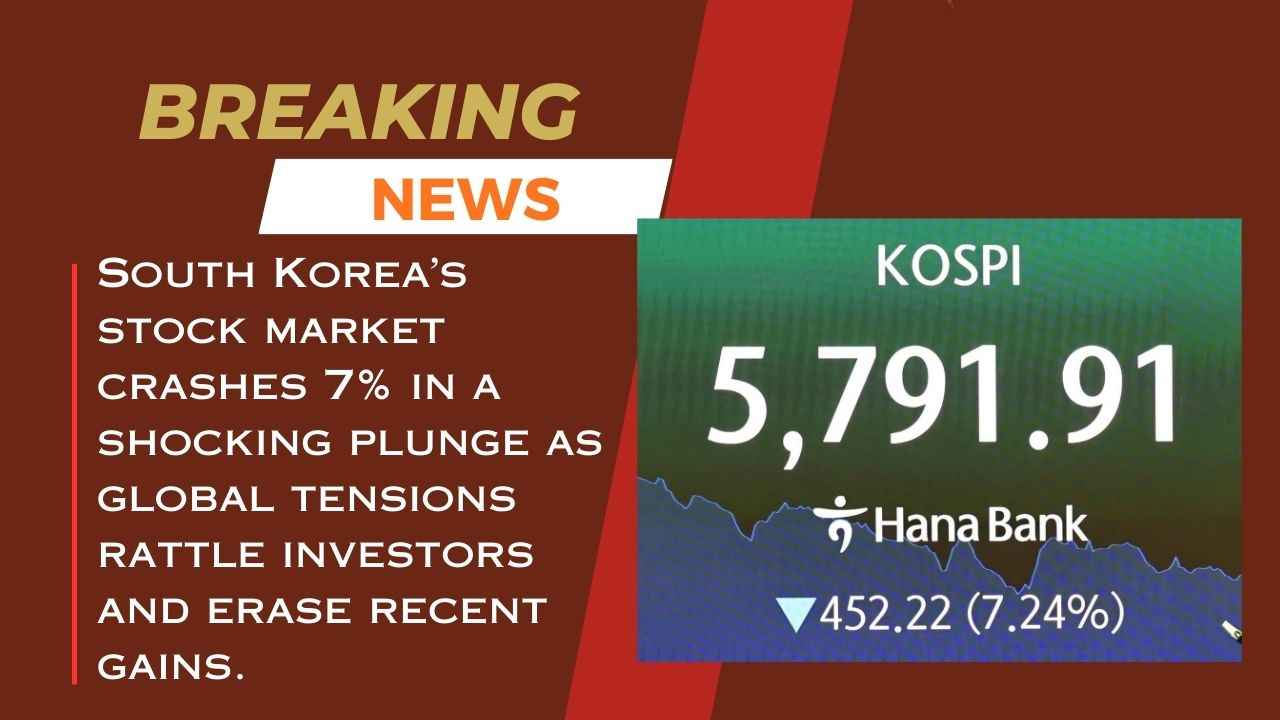
South Korea Stocks Plunge 7% in Stunning Crash