


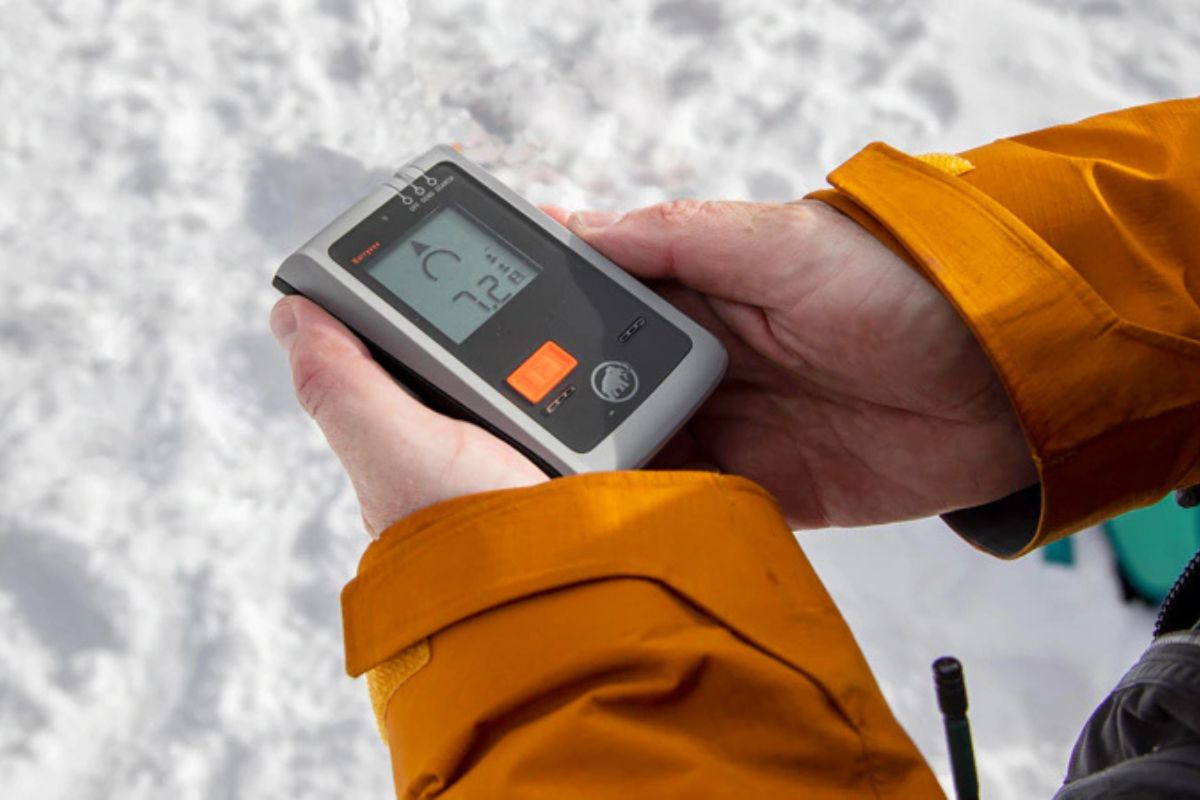
In the exciting world of winter sports, safety is essential; specially when you are traveling into dangerous weather areas. Avalanche transceivers nowadays have become an important tool for skiers, mountainers, and snowboarders, which offers an important lifeline in emergencies.
This high-end device enhances the robust transmission frequency of 457 kHz and the excellent range of 70 meters, which ensures that you can locate buried victims swiftly. The device has a triple antenna system to get high precision and a backlit LCD for easy navigation.
In this guide, I have covered what avalanche transceivers are and explained the difference between a beacon and a transceiver, and mainly about the top 5 avalanche transceivers on which winter sports lovers rely.
Let’s discuss in detail.
What are avalanche transceivers?
An avalanche transceiver is an electronic rescue device used by people traveling in avalanche-prone or hazardous weather conditions.
This device continuously transmits the radio signals, which can be detected by other transceivers if the user is hidden due to snow.
Avalanche transceivers work in two different modes, such as:
- Transmit mode: The device sends the signal while you are skiing and riding.
- Search mode: The device receives signals to locate buried victims.
The modern avalanche transceivers are compact in size, powerful, and designed for use in stressful conditions. Each individual traveling in avalanche terrain must wear an avalanche transceiver on their body or on their outer-layer shovel.
What is the difference between a beacon and a transceiver?
The difference between a beacon and a transceiver is basically about terminology rather than their functions:
A beacon is a generic term for any device that sends signals but doesn’t receive. The name comes from the older technology.
A transceivers are the device that both sends and receives the signals. In the avalanche safety features, modern devices always work as a transceiver. When the user is moving in avalanche terrain, the device continuously transmits the signals.
This transmitter device switches to the search mode when a rescue is needed. And its search mode allows it to receive signals from buried victims.
In avalanche saftey the modern devices are usually avalanche transceivers, even though many people call them a beacon casually.
The professionals, manufacturers, and training organisations use the name transceivers because it correctly describes the device’s work.
In short, the beacon is an informal term while the transceiver is the modern and accurate name for the todays avalanche device.
Top 5 Avalanche transceivers for winter sports enthusiasts
1. Mammut Barryvox avalanche transceivers
Mammut Barryvox is an advanced and professional option for users. The Mammut Barryvox is usually considered the gold standard in avalanche transceiver technology. This transceiver is designed for ski patrol, guides, and serious backcountry riders. It offers an exceptional range and advanced customisation.
It has an easy-to-use and see screen, a encouriging mode slider with a lock, icons, and onscreen directions. With its long range and excellent user interface, the Mamut Barryvox is the best beacon for anyone who wants to upgrade an older beacon.
Key features:
- Smart fine search guidance.
- Offers an extended search range of over 70 meters.
- Includes the advanced multiple burial management.
- Offers the customised settings.
Pros:
- Offers a long range.
- Great and comfortable design.
- Offers a firm signal lock, no matter how sloppily the user is.
- Easy-to-read screen and easy user interface included.
- The device is powerful, accurate, and trusted around the globe.
Cons:
- Long-range comes at a cost of potential interface issues.
Price: £300 to £340
2. Ortovox direct voice
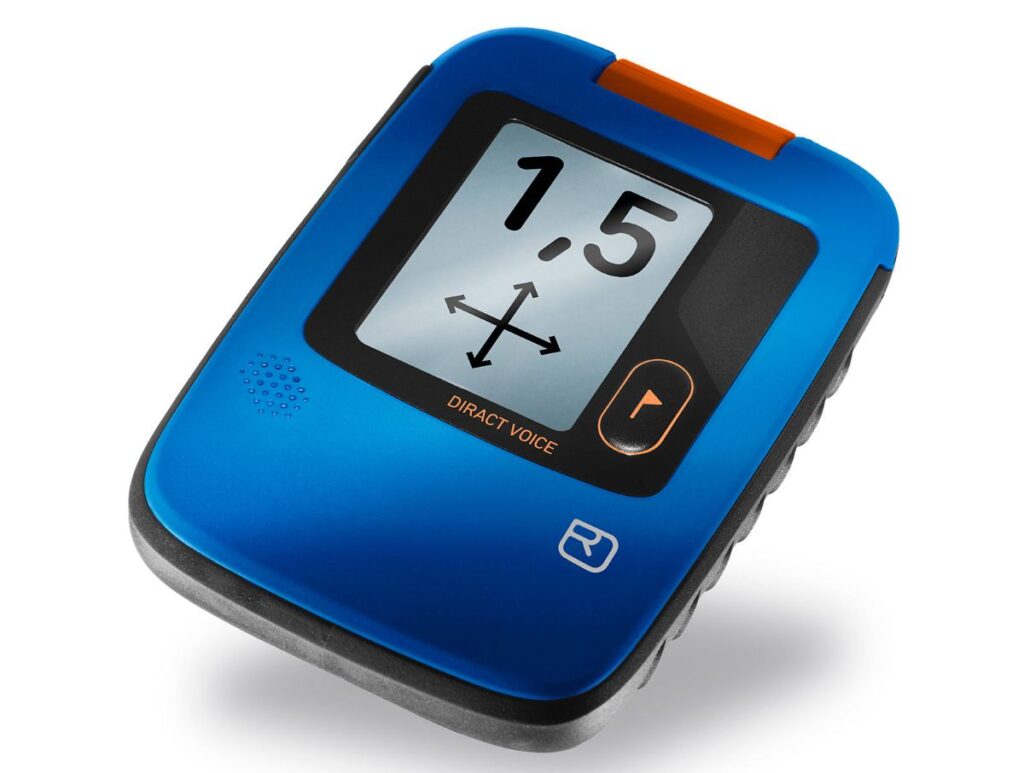
Ortovox direct voice is a premium avalanche beacon that comes with unique features among avalanche beacons. The Orthovox company is well known for its thoughtful design in all its products, and the beacons feels vey nice in the hands.
Testers found the voice guidance to be useful, particularly if we want to use it in real rescue situations where we would be very stressed.
Ortovox stands out as the world’s first avalanche transceivers with integrated voice guidance; it actually talks you through the rescue process. For beginners or those who want extra reassurance in emergencies, this device reduces the panic and improves response time.
Key features:
- Offer clear spoken instructions while searching.
- Comes with a lightweight and compact design.
- Includes the reliable three-antenna system.
- User-friendly and simple one-button operation.
Pros:
- The device feels great in the hand.
- Offers smart design choices.
- Large and easy-to-read screens.
- In the signal search phase, voice assistance can keep rescuers on track.
Cons:
- Noticeably shorter range.
Price: £310 to £350
3. Black diamond guide BT
Black diamond guide BT is professional level transceiver with a wide range and excellent performance in single and multiple burial situations, and an extensive suite of unique features.
During the search phase, this beacon provides some haptic feedback with vibrations when it needed the signal is needed. This is a nice bonus, as it includes a straightforward and easy-to-use interface.
The Black Diamond guide BT combines proven reliability with modern technology,y and its Bluetooth connectivity allows users to update its firmware and manage settings via a smartphone app.
Key features:
- Easy Bluetooth connectivity updates.
- Includes a large and ready-to-use display.
- Offers efficient multiple burial marking
- Intuitive directional arrows.
Pros:
- This one is the professional-grade transceiver.
- Offers excellent performance in signal and multiple burials.
Cons:
- Its harness tether is too short.
Price: £320 to £410
4. Pieps DSP Pro avalanche transceiver
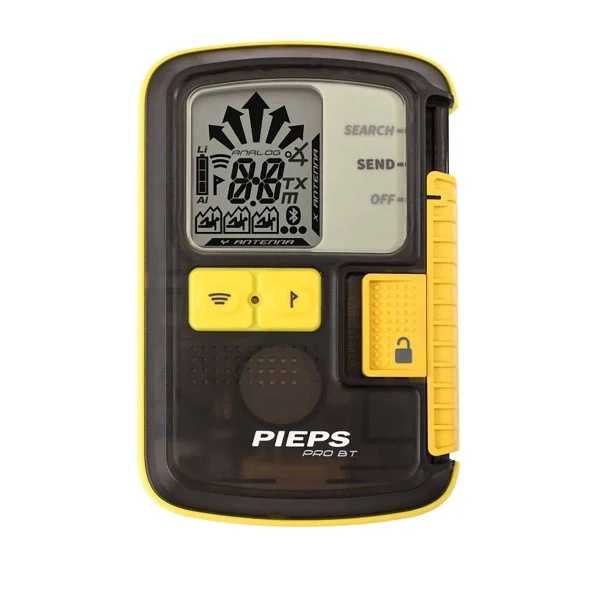
The design of Pieps DSP pro is unique as it has a swingout antenna, which can be useful to start searching, and this features not commonly found in other transceivers.
Piepes DSP Pro is a professional-grade tool for guides, educator and professional search and rescue personnel. It offers the easy to use interface with a fine backlight.
Key features:
- Offers up to a 60-meter search range.
- Automatic revert to transmit motion sensor is included.
- Offers three antenna system for accuracy.
- Interference management.
Pros:
- Offers a long range and a fast processor.
- Simple and effective antenna which turn over to move from send to search.
- Interference protection system and dual antenna signal processing.
Cons:
- The button can be hard to push for some users.
Price: £474 to £482
5. BCA Tracker 4
BCA Tracker 4 offers the best value and ease of use to its users. The BCA Tracker series sets high standards in the backcountry world.
And this series continues that tradition with speed, simplicity, and clarity. This BCA Tracker 4 is ideal for riders who want more reliability without unnecessary complexity.
Key Features:
- Fast signal acquisitions.
- Includes the bright LED display.
- Offers minimalist controls.
- Comes with excellent battery efficiency.
Pros:
- Offers a simple and easy user interface.
- Its glove-friendly design can help users use it while they are wearing gloves.
Cons:
- Multiple burial performance suffers because of signal suppression.
Conclusion
The avalanche transceiver is one of the most important pieces of equipment that every winter space lover should have.
Understanding the difference between a transceiver and a beacon clears your confusion and helps you to focus on what really matters: your readiness, safety, and smart decision-making in the mountains.
Adventures must be thrilling but should be safe. Stay prepared, respect the terrain, and enjoy winter sports with confidence.